By JIM MAGDEFRAU
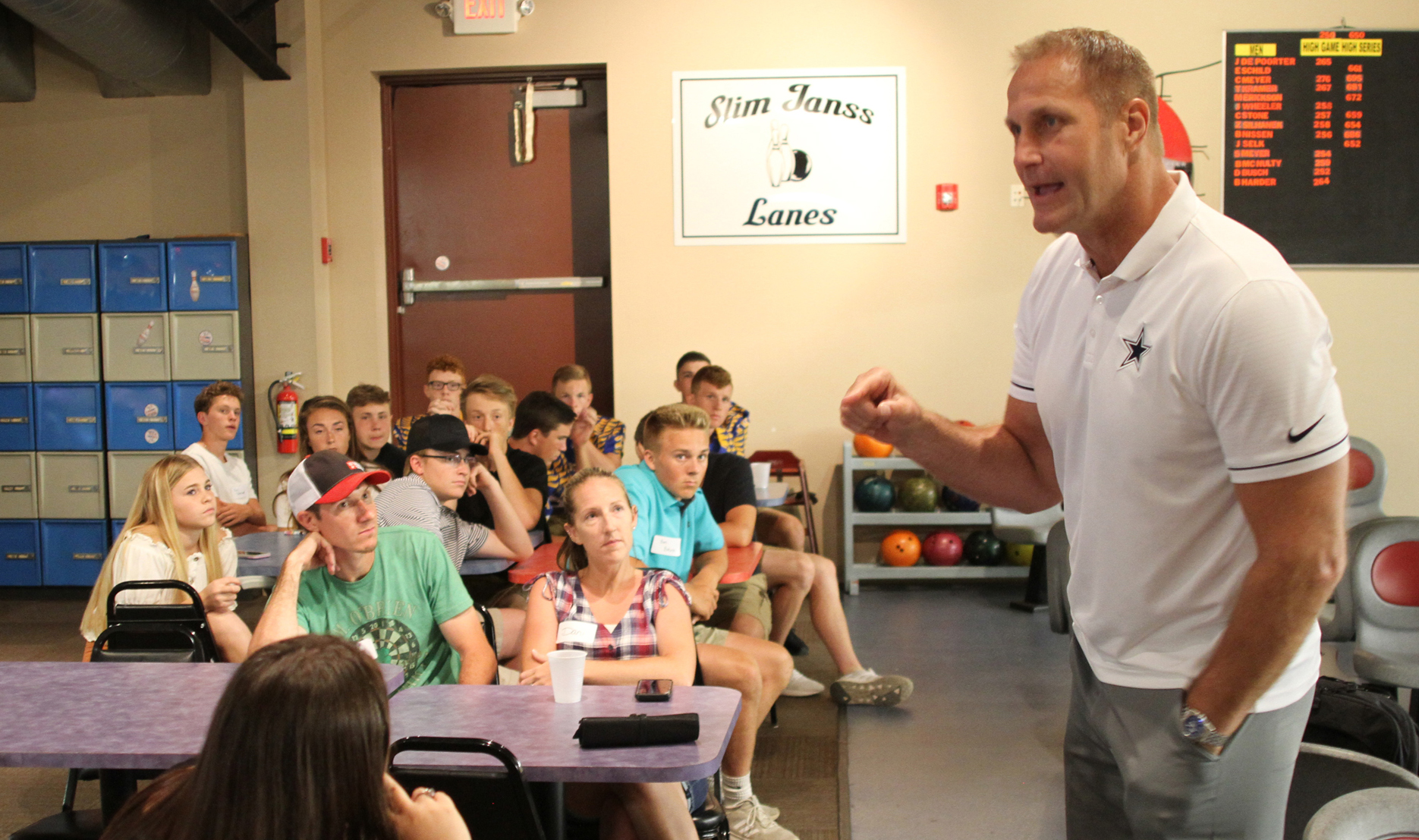
It was a local cause that brought Elberon native and former Air Force Pilot and Dallas Cowboy, Chad Hennings, back to the Turner Hall, Keystone, on July 6, 2019.
The night was a fund-raiser for the Turner Hall as part of an ongoing drive to help pay off the debt on the hall.
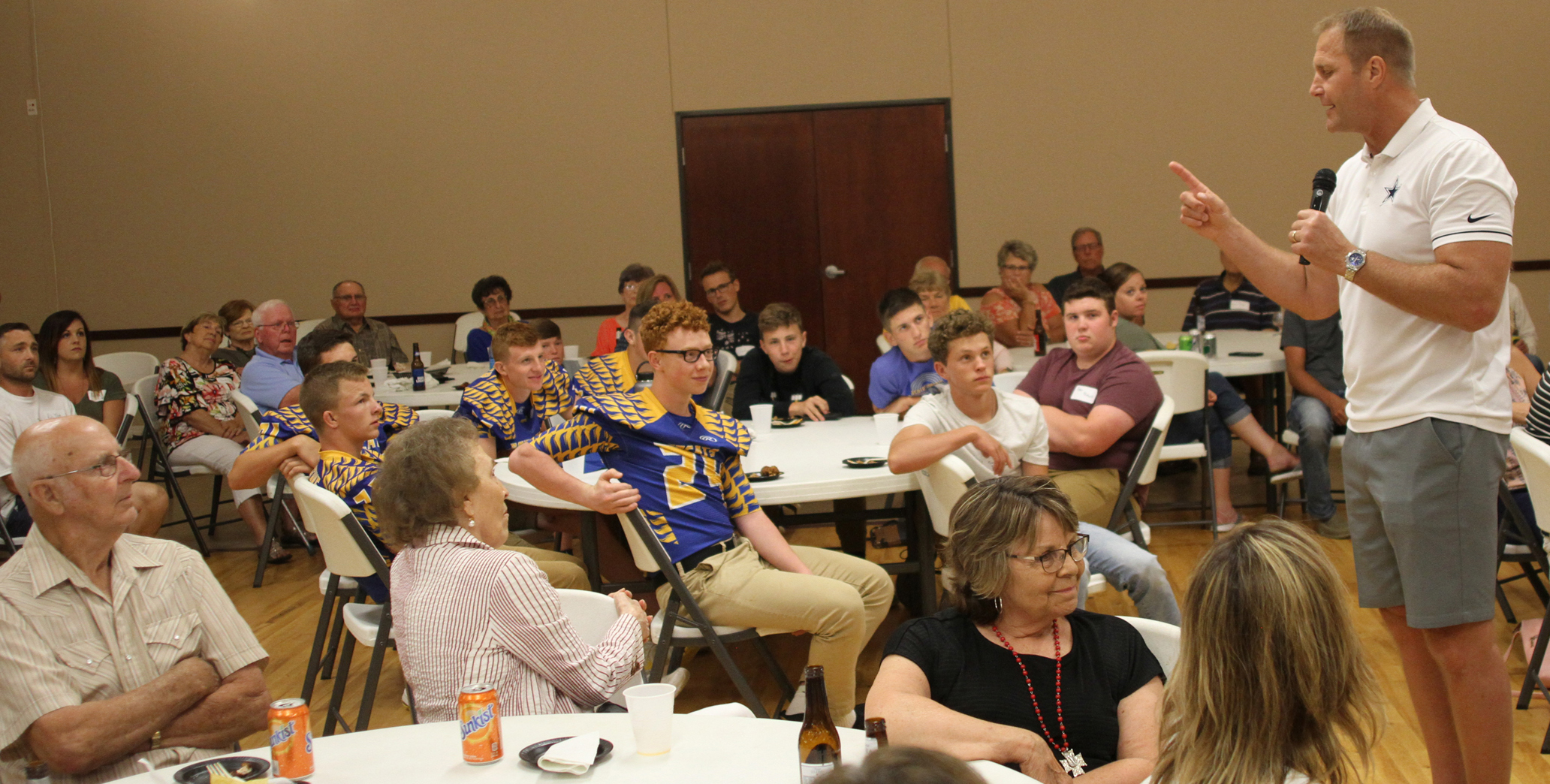
His message was of the work ethic he’s maintained from the farm to school, college and military, and then professional football and how this applies to what anyone does.
In his introduction, former Benton coach Don Logan said Chad is still a man of character, principle and discipline.
Hennings credited a psychology class with Logan in prompting his studies in sociology, psychology, leadership and integrity training.
Hennings said he was there to tell some stories. “Here in the Turner Hall I learned a lot of important lessons in life,” he grinned.
In his nine years with the Cowboys, he was able to play twice in Japan, three times in Mexico, two times in Canada and one time in England. “There’s a reason the Dallas Cowboys are America’s Team,” he reasoned. They had fans all over the world. One of their biggest fans was the former Saudi Arabian ambassador to the U.S., Prince Bandar. When they played the Redskins, they usually met and exchanged stories about flying jets. On one occasion, they played the Redskins and Prince Bandar was flying VIPs. They stopped in Dallas.
After game, Hennings would make a point to visit with players on the other side, then run through the tunnel to the locker room to take a shower. He just pulled up his shorts and there was a tap on his shoulder. It was Prince Bandar, who said, “Let me introduce you to my friend.” The friend was Nelson Mandela. He showed a picture of the meeting, “You can see the shock and awe in my face. Basically meeting one of the greatest leaders of the 20th century, in my underwear.”
Hennings said he learned two great lessons. “Opportunity knocks at the most in opportune times. And two. Never get caught with your pants down.”
Experiences
He’s had a lot of experiences, and wanted to share the experiences that molded him as to who is today.
Looking at high school, he observed, “The greatest lessons that I learned through life was through failure.” He was a skinny beanpole kid in wrestling his freshman year, about fouled about of every game as a basketball player his sophomore year, and then had a successful season his junior year. He reached his goal of making it to state. Six minutes after the whistle, he had lost in a match he should have won. “I beat myself mentally,” Hennings recalled.
He later went to a freestyle tournament. “I got my butt kicked twice.” He recalled, “I didn’t have the aspect of focus, of commitment, of intangible aspects of what I needed to take it to the next level.”
Chad, pointing to the high school athletes, pointed out that he pulled back at that time and made a commitment to himself that he would never allow himself to be defeated again. “I was going to outwork everybody,” he recalled. He became a maniac in the weight room, and did whatever it took to take it to the next level.
“I lived, I breathed and I actually slept wrestling,” Hennings said. He visualized wrestling moves, and did the same in football.
Come his senior year, he smoked everyone, winning each match by a pin or major decision. The only point scored against him was when his opponent received a penalty point or a hard cross face.
“But I won. I remember standing on the victory platform, bending down and Coach Eckenrod gave me the medal,” Hennings said. “I said this is what it’s all about,” he remembered thinking.
“It’s about that focus. Are you willing to put the time, the commitment, the effort in to do what it takes to succeed?”
“Everybody wants to be a champion. But are you willing to pay the price to do what it takes to get there?”
It applies to every day life. He added, “Don’t be afraid to fail.” His greatest failure became his greatest success. “Take chances, but work. Work work work!”
College
Moving on to college, he recalled that his senior year at the Air Force Academy, he led the nation in sacks, and won the Outland Trophy. He thought it’d be cool to join the NFL. That’s where his heart was, but he knew he’d made a commitment to serve. He received waivers to fly because his height and weight. At the same time, he was drafted by the Cowboys. He take his Air Force friends to see the games. “It was tearing my guts up inside because I knew I wanted to out there.” To be a man of integrity, he had to follow through with that commitment.
Integrity is a choice, he said. One chooses their actions, words and deeds. “Integrity is paramount to everything.”
Military and football
Moving a head another four years, the Armed Forces had a reduction in force. His commitment was waived. He flew his last mission in Northern Iraq in February of 1992. He played in the Super Bowl the same year.
Going back into football was difficult. He went from the cool of England to the humid 90s in Austin. He could lose 14 pounds of water weight each practice. He was drinking by the fire hose but he made the team. The first seven or eight games he was inactive. He stood on the sidelines. He “sucked up his pride” and told Coach Jimmy Johnson he’d do whatever it takes to take the field. “I’ll play on special teams. I’ll run down kickoffs. I’ll run down punts.” Coach said, “OK.” The next game was his first game. His lesson, “Humility trumps pride every time.” He explained, “No matter how good you think you are, everyday is a new day.”
Community
A lot times people define who they are by what they do. Occupations change. His defining moment on identity came when his team had just won their third Super Bowl in four years. His son faced medical problems. “It was the first time in my life that I couldn’t control something by my performance,” he said. He struggled on who he was. Psychology and his faith came into play. He read a book by an Auschwitz survivor, learning most people who survive have a purpose beyond themselves.
He also goes back to a book called “Being Mortal.” Little things in life, such as relationships, friends, family and faith are more important than accolades and accomplishments.
“I’ve been able to achieve a lot of things in my life. So what? Your legacy is not defined by material possessions or how much money you have in the bank when you retire, nor is it your accolades and accomplishments, the plaques you have hanging on your office wall. Nor is it by setbacks,” Hennings told the crowd.
“Our legacy is truly defined by relationships and people you’ve had an impact on in your life … hopefully for the good. Friendships matter. Families matter.”
He added, “We are a community. We share common experience in our life. Something that binds us and unites us. That’s what is most important.” While the country has become divisive, it’s important to have community and what holds people together. It’s relationships. It’s commonality.” He paused. “The Turner Hall!”
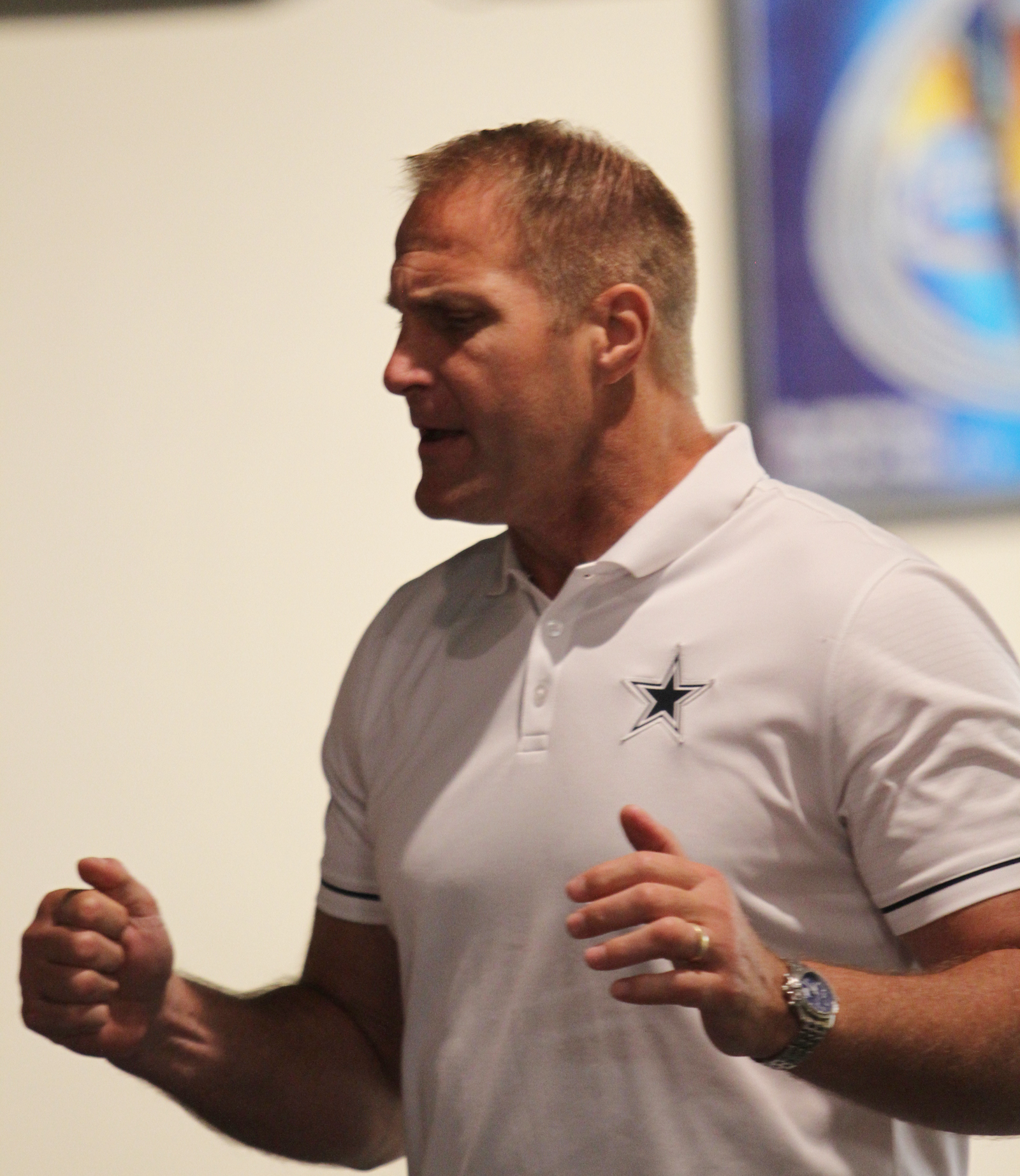
Hennings at the Turner Hall. 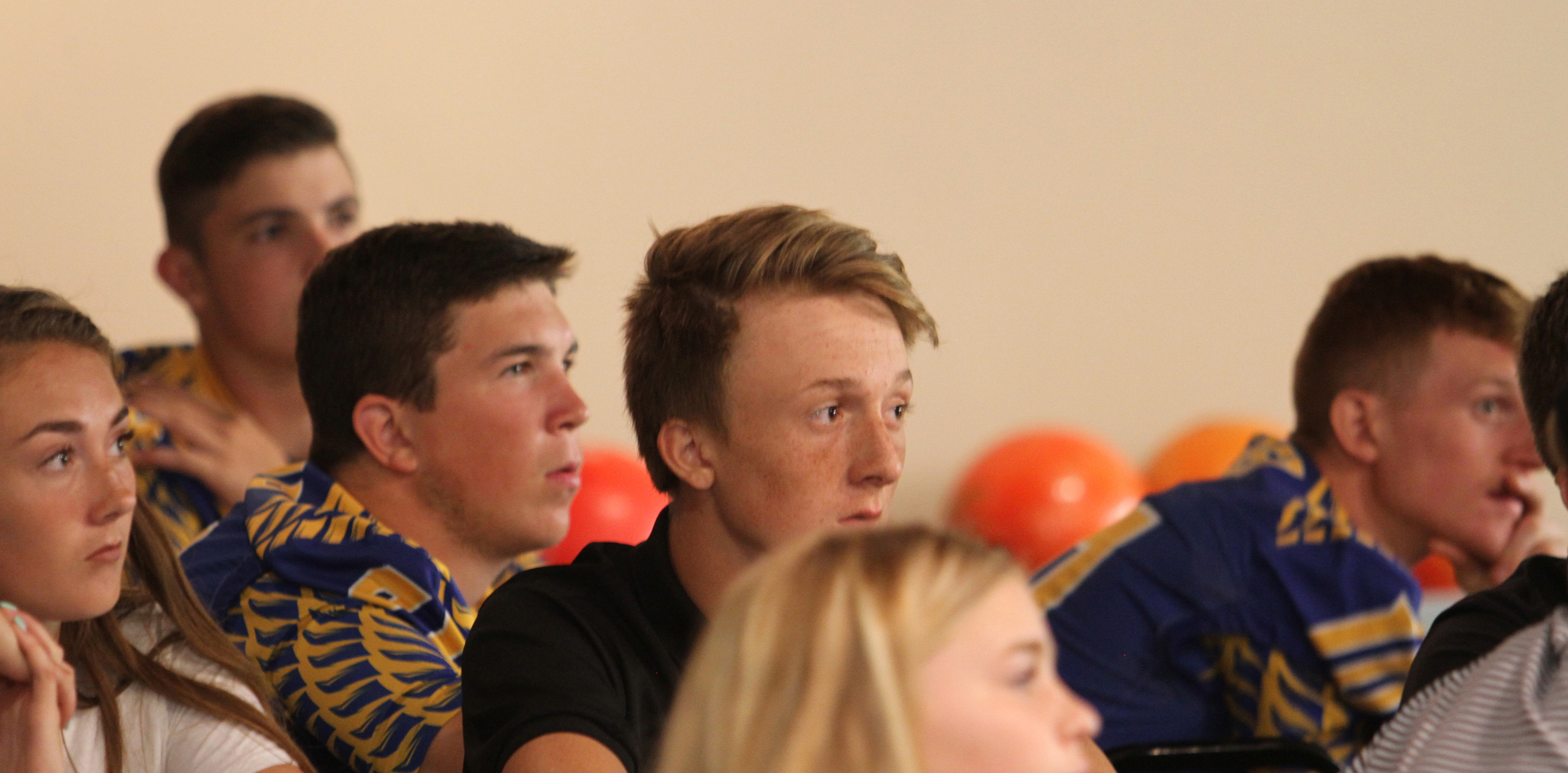
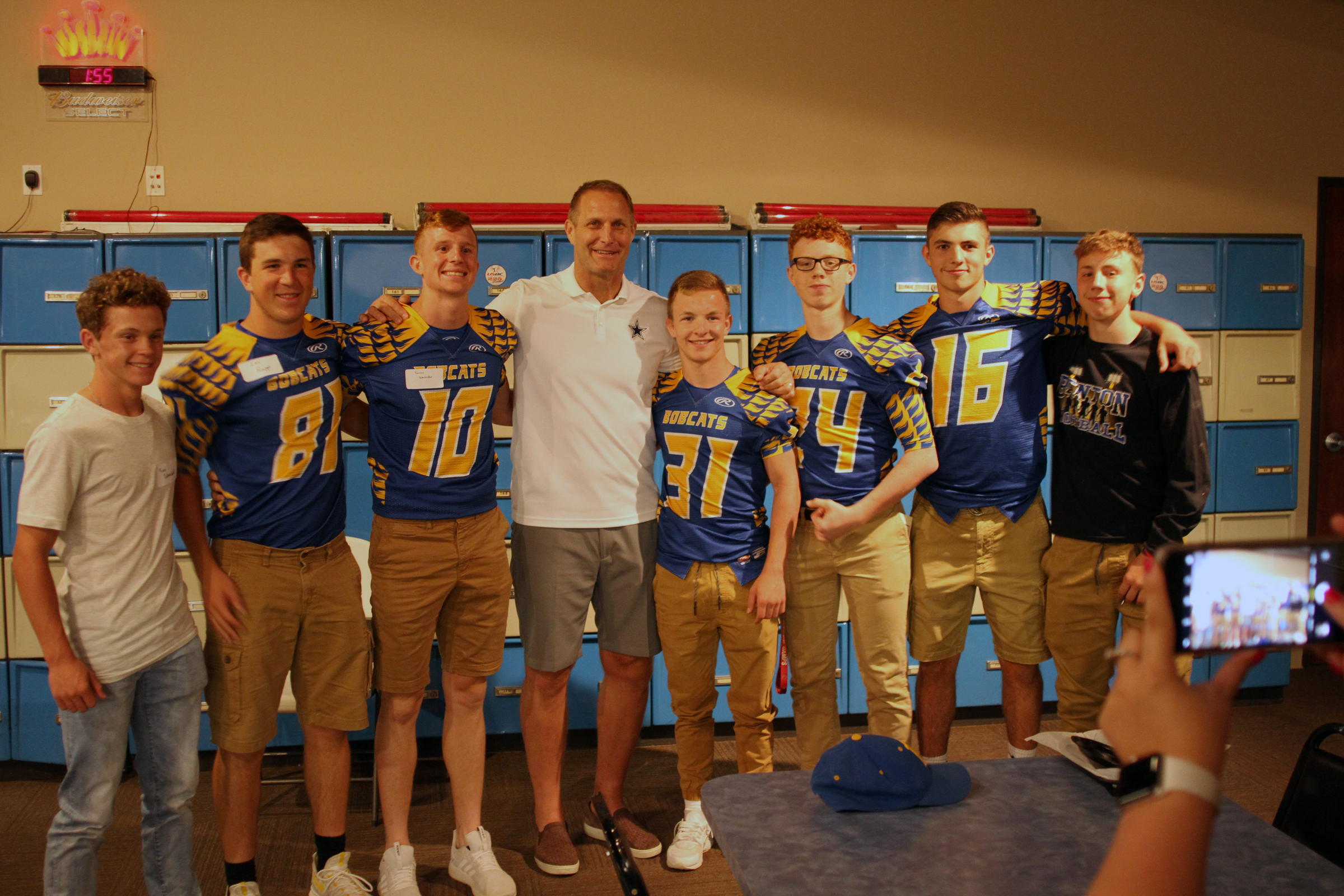
Hennings and BC athletes. 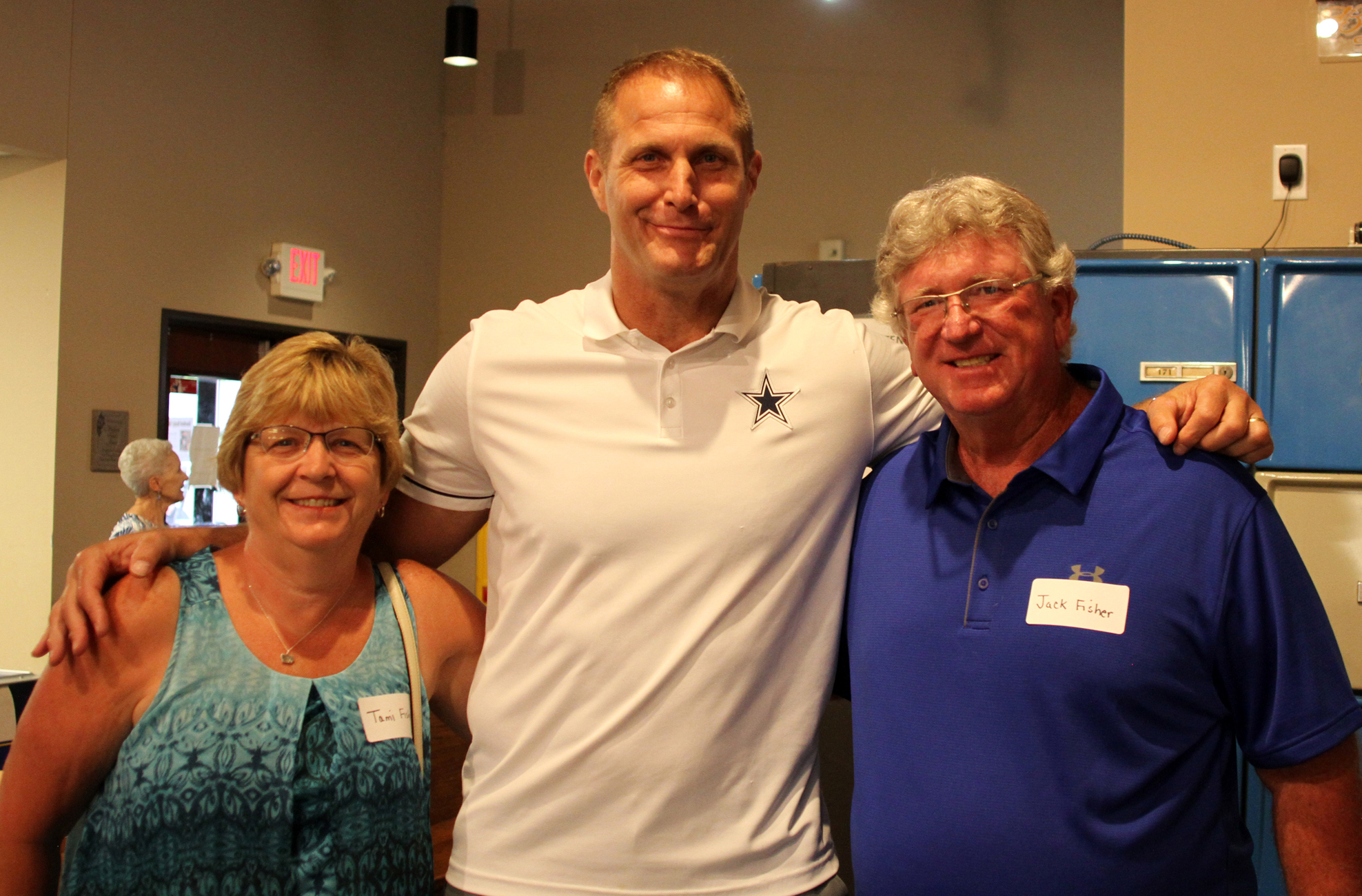
Henniungs and the Fishers. 
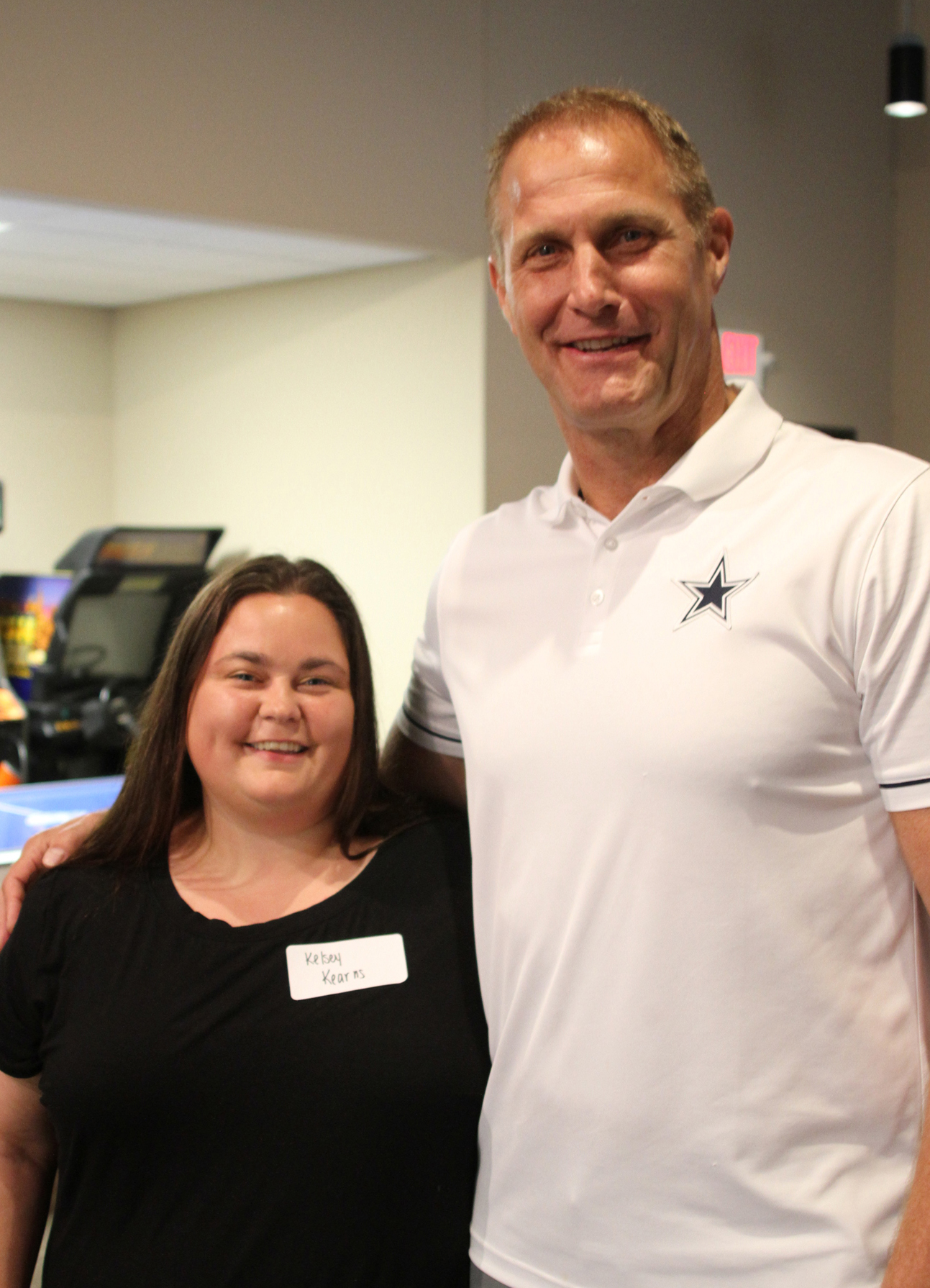
Hennings and Kelsey Kearns. 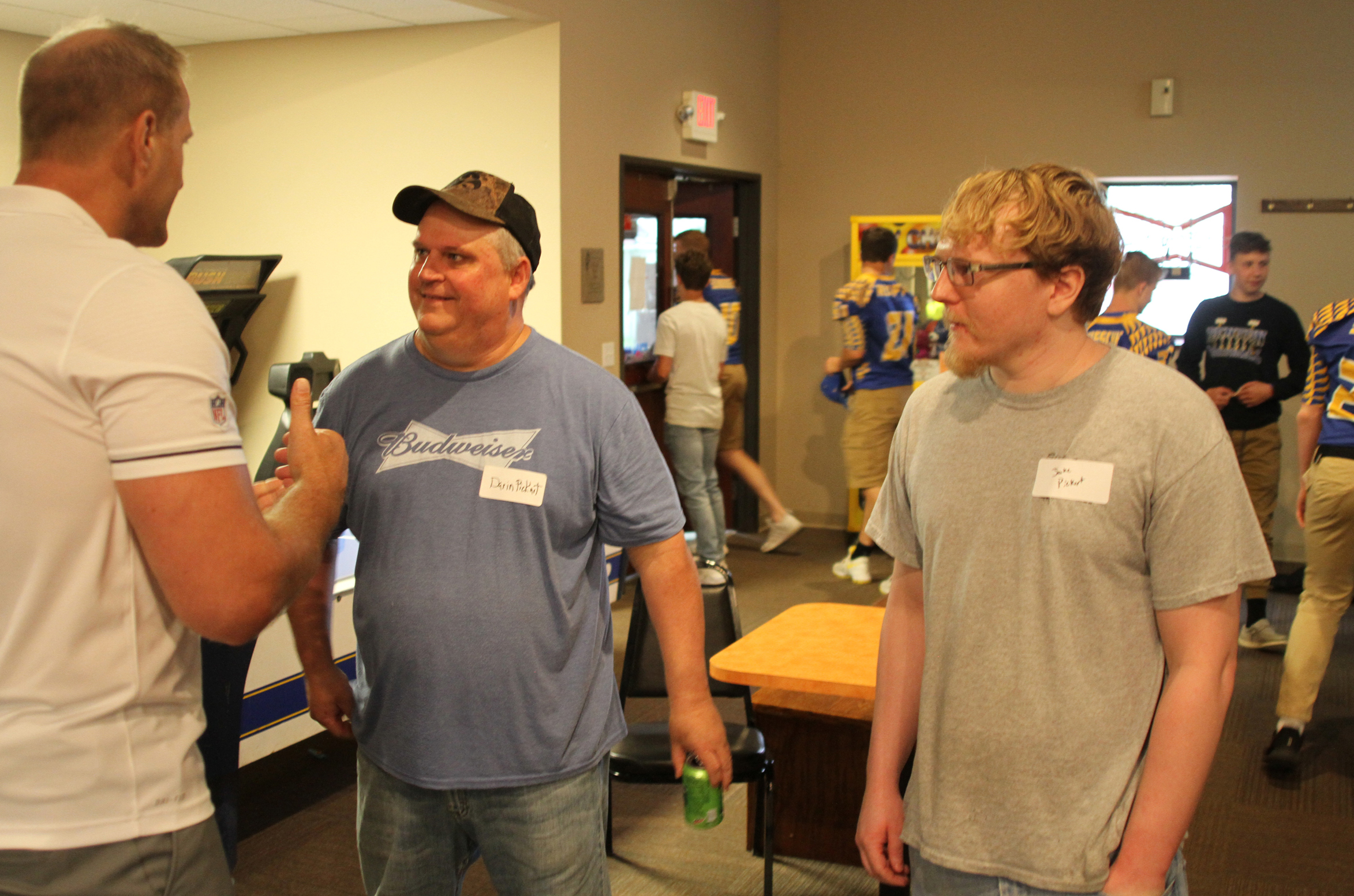
Pickarts and Hennings. 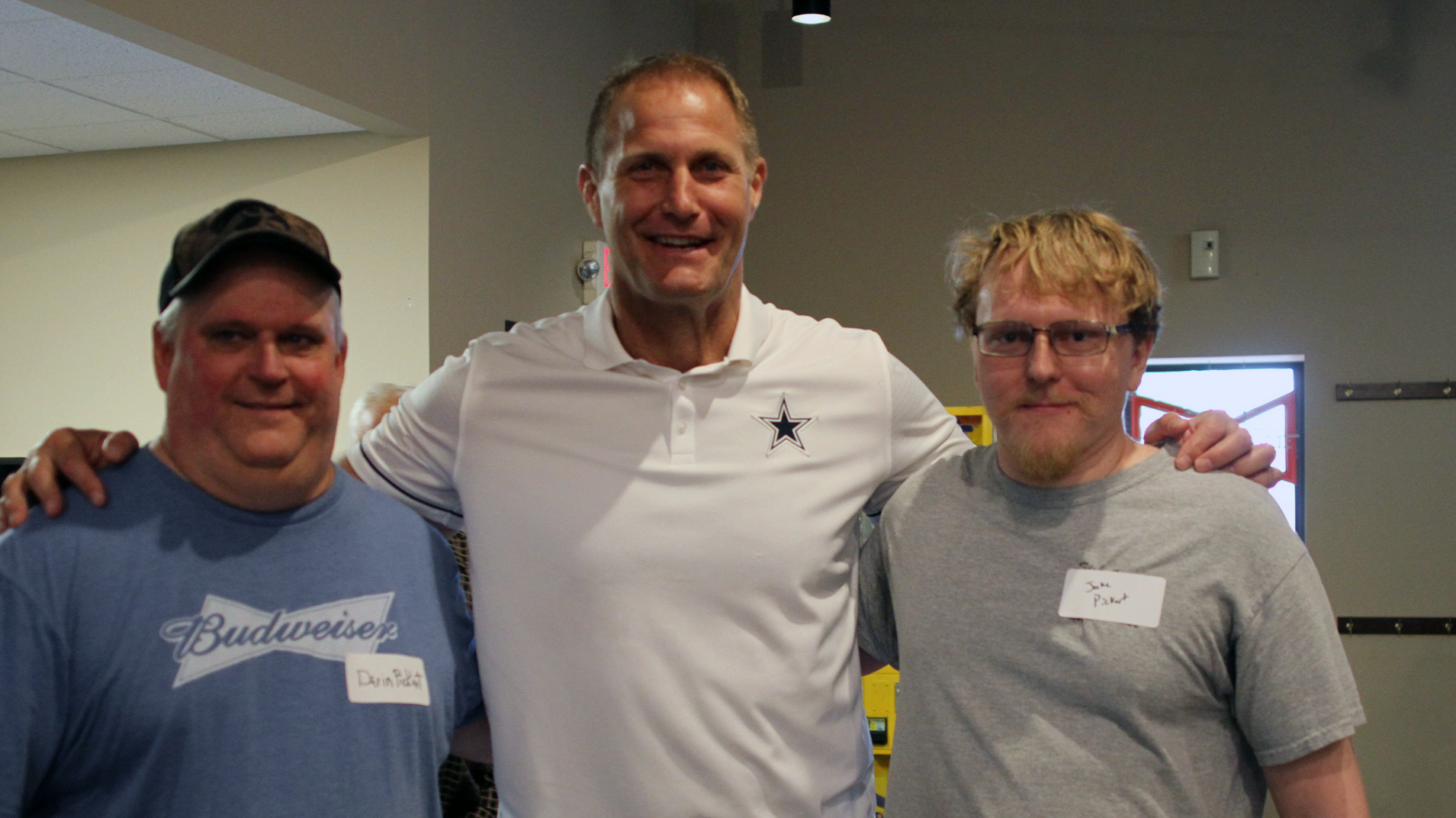
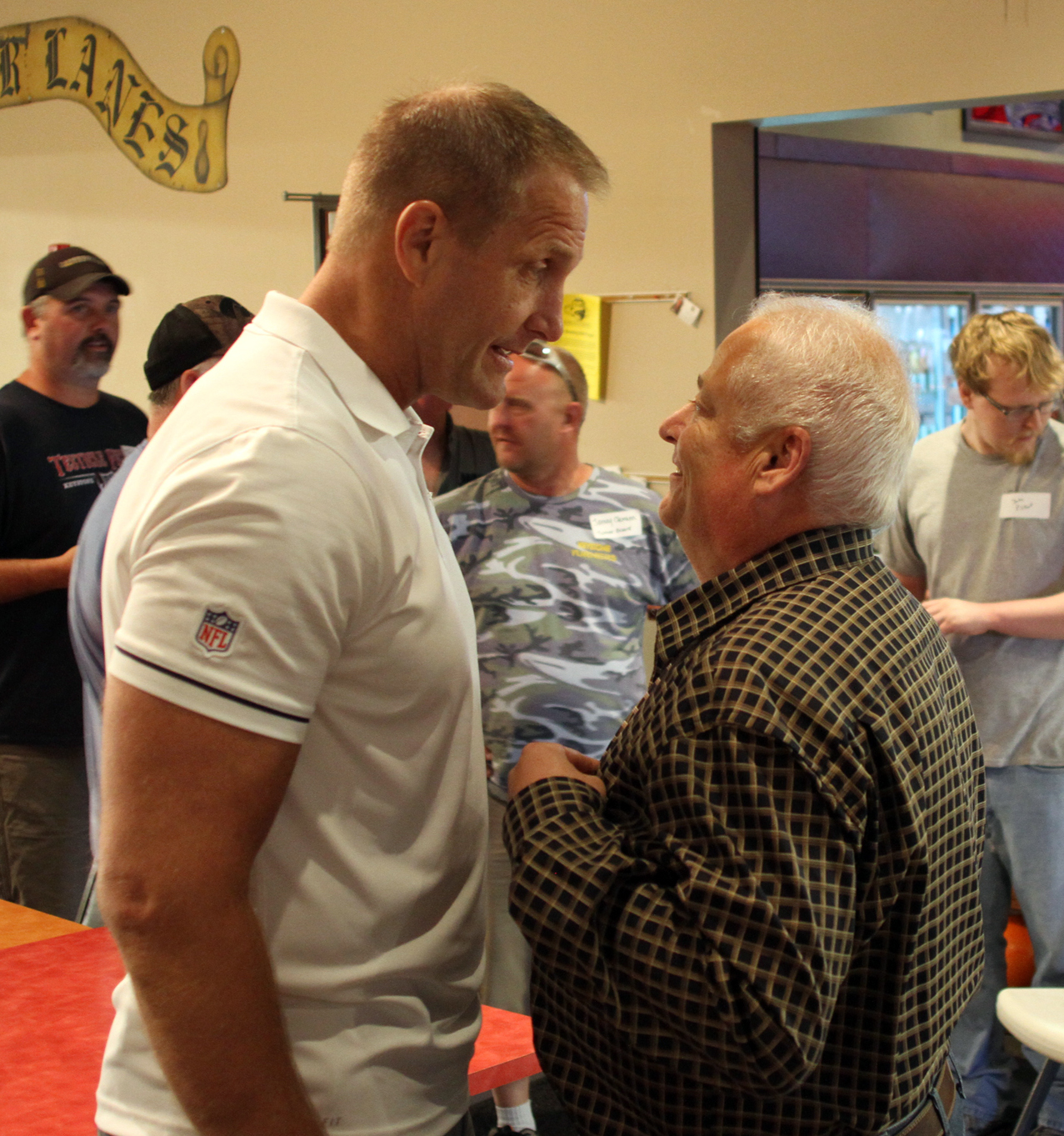
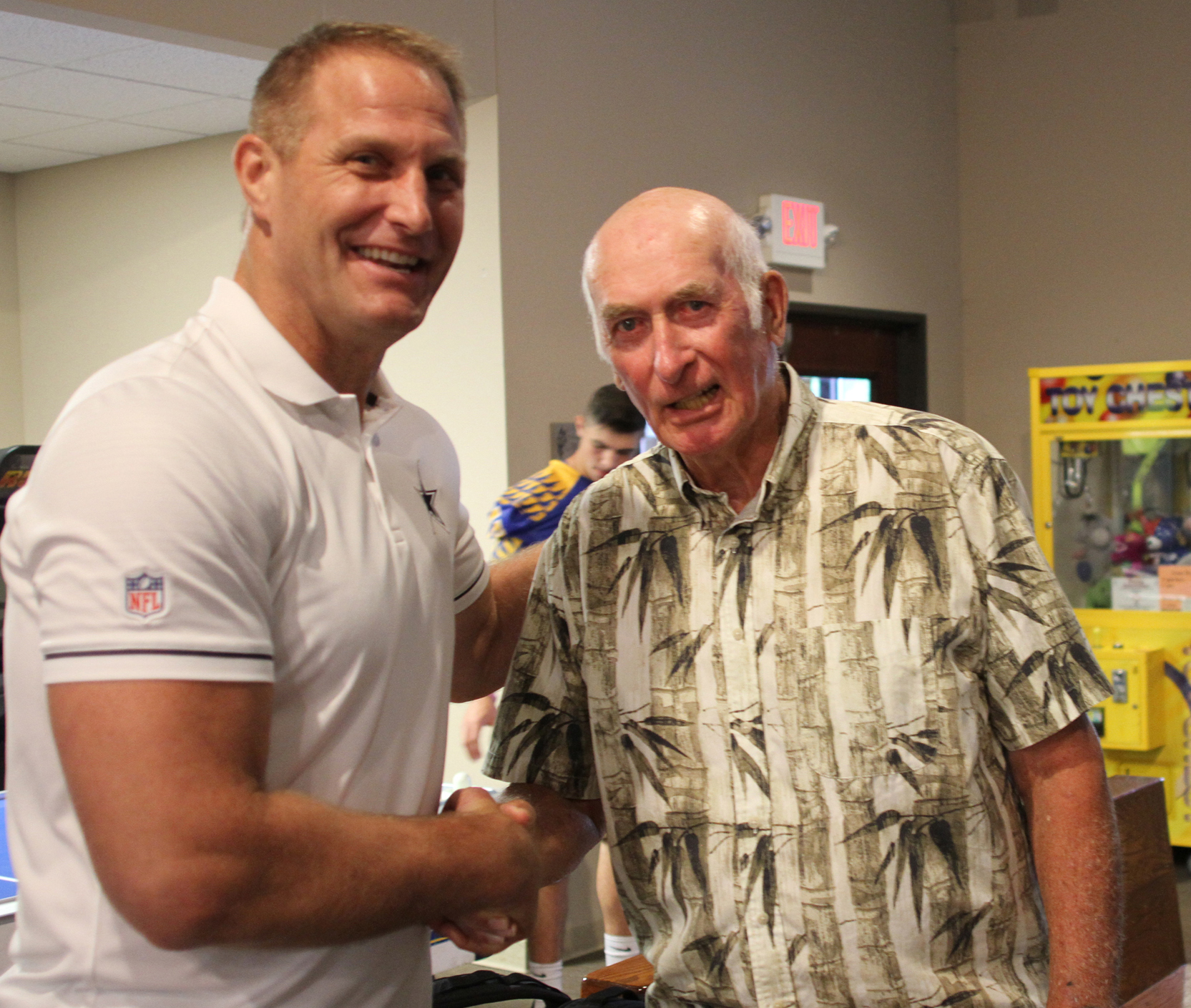
Hennings and Coach Wiebke 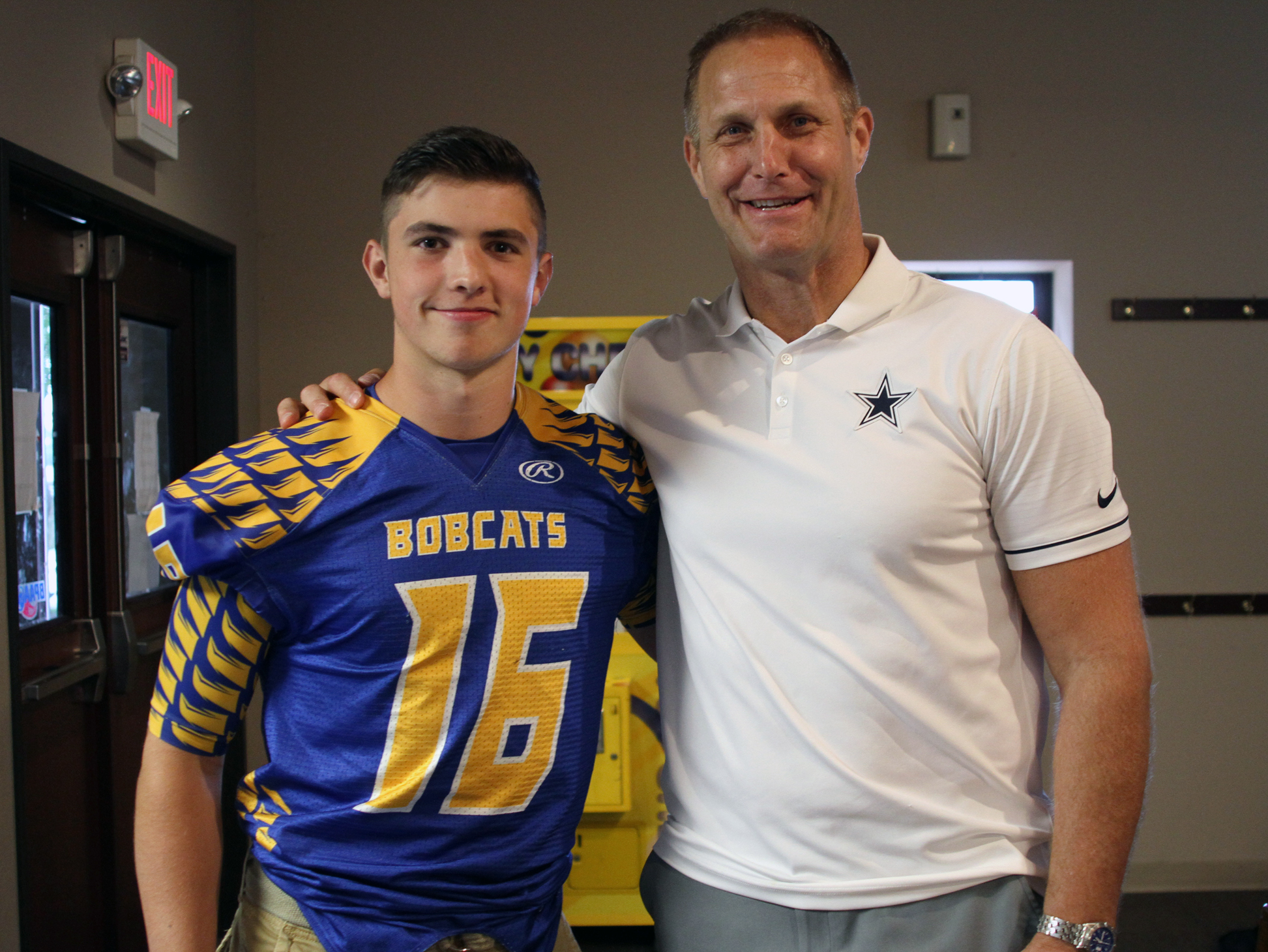
Clayton Krousie and Hennings 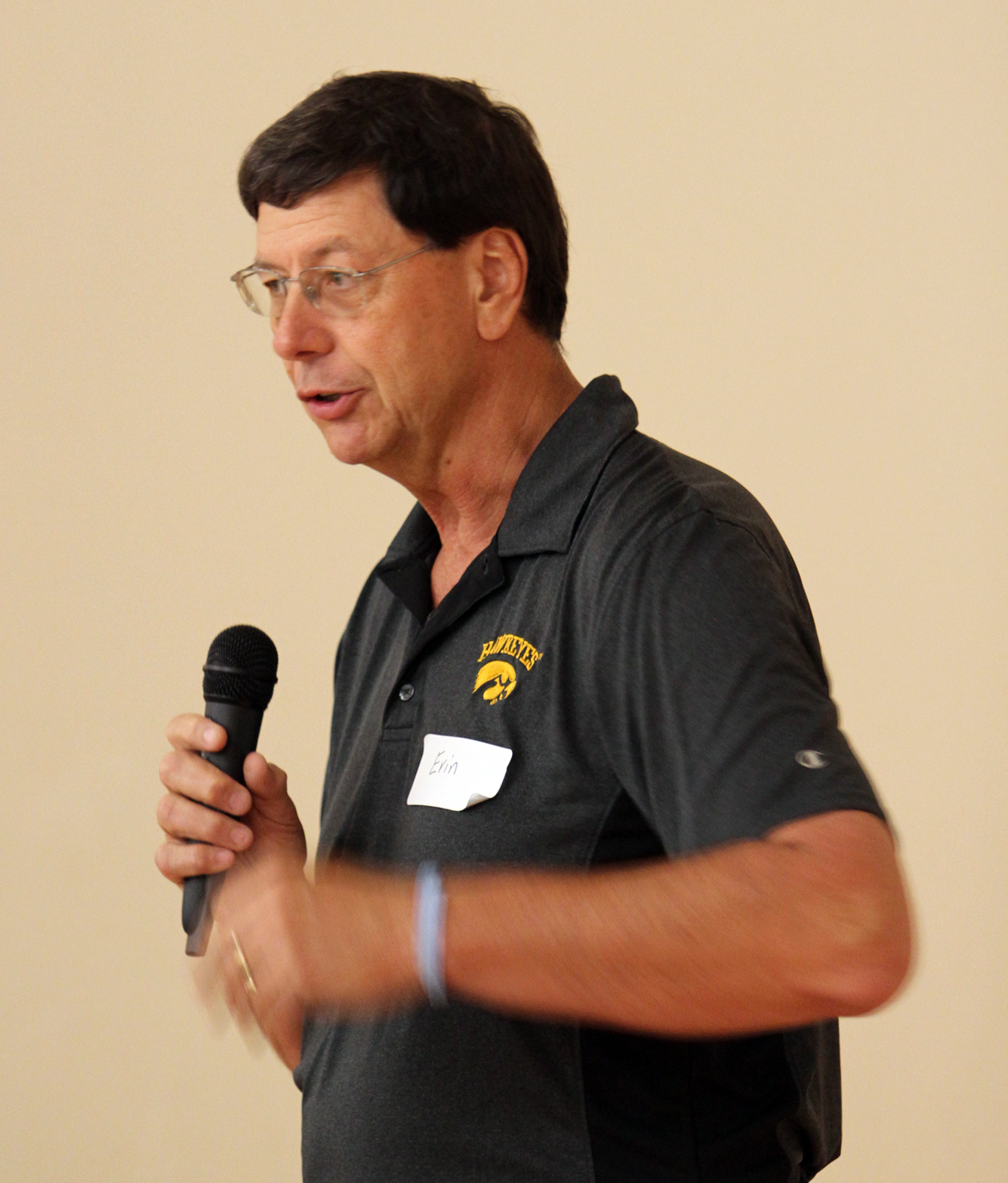
Erin Janss 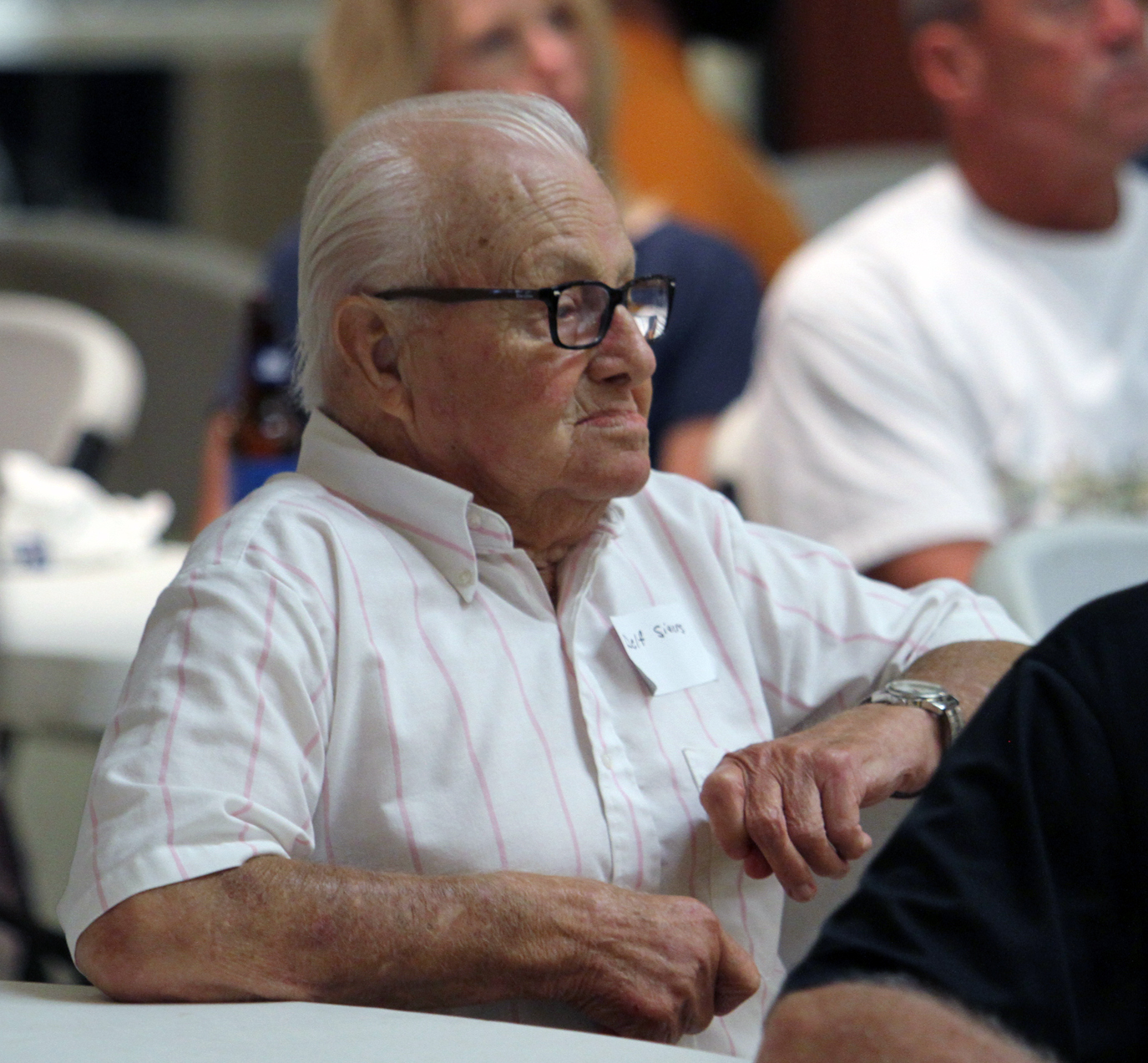
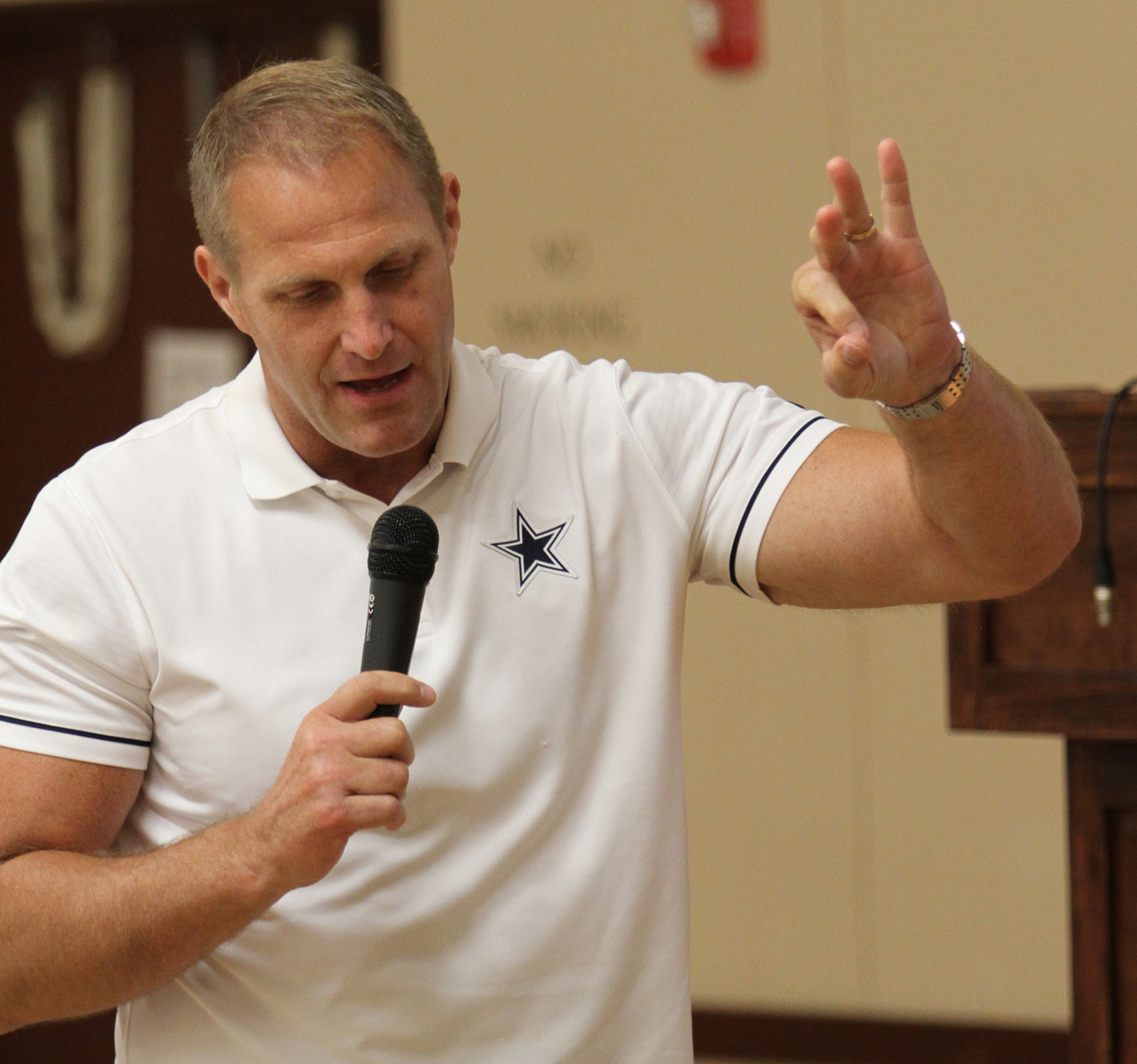
Hennings speaks in Keystone 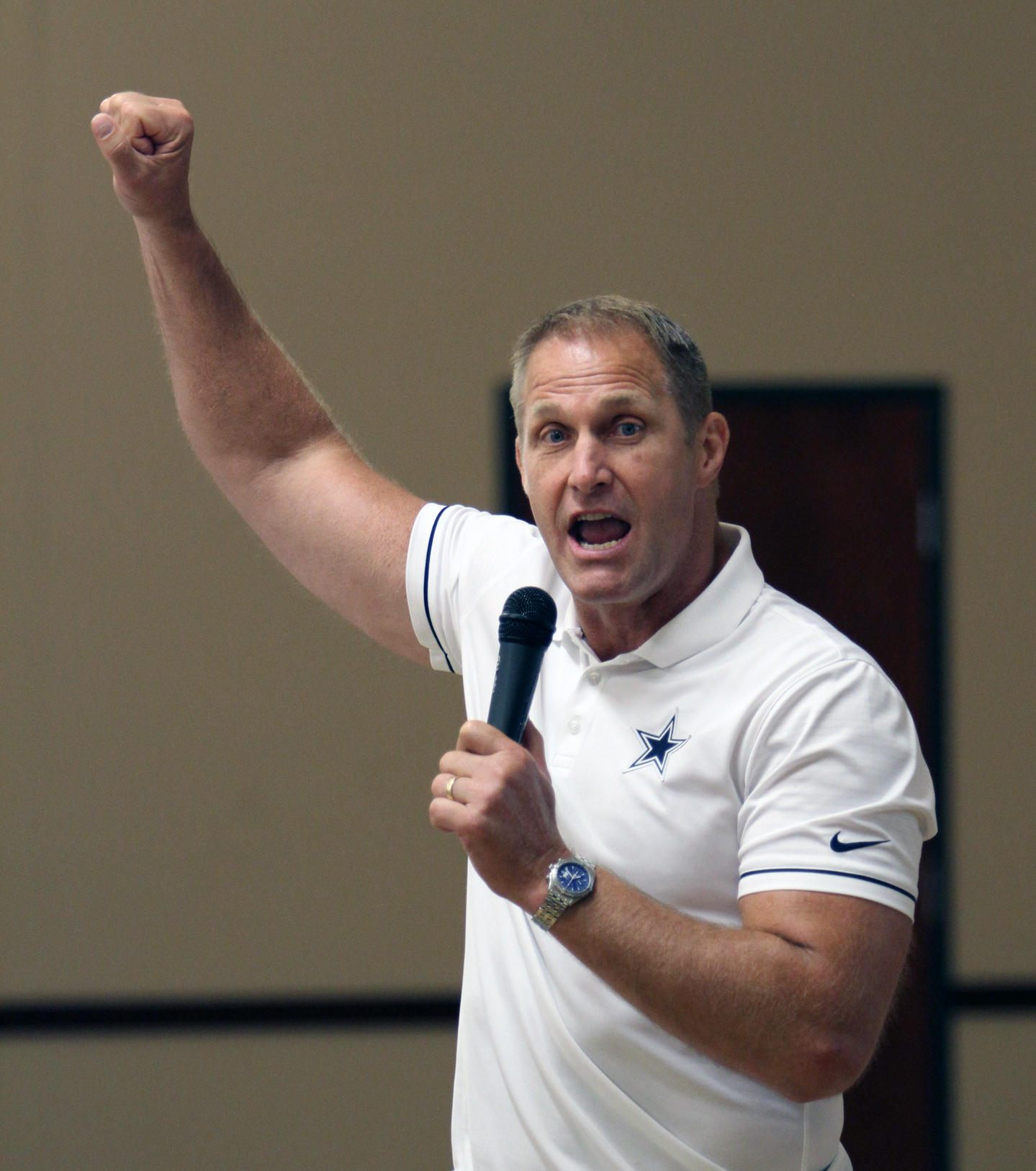
Hennnings makes a point in Keystone. 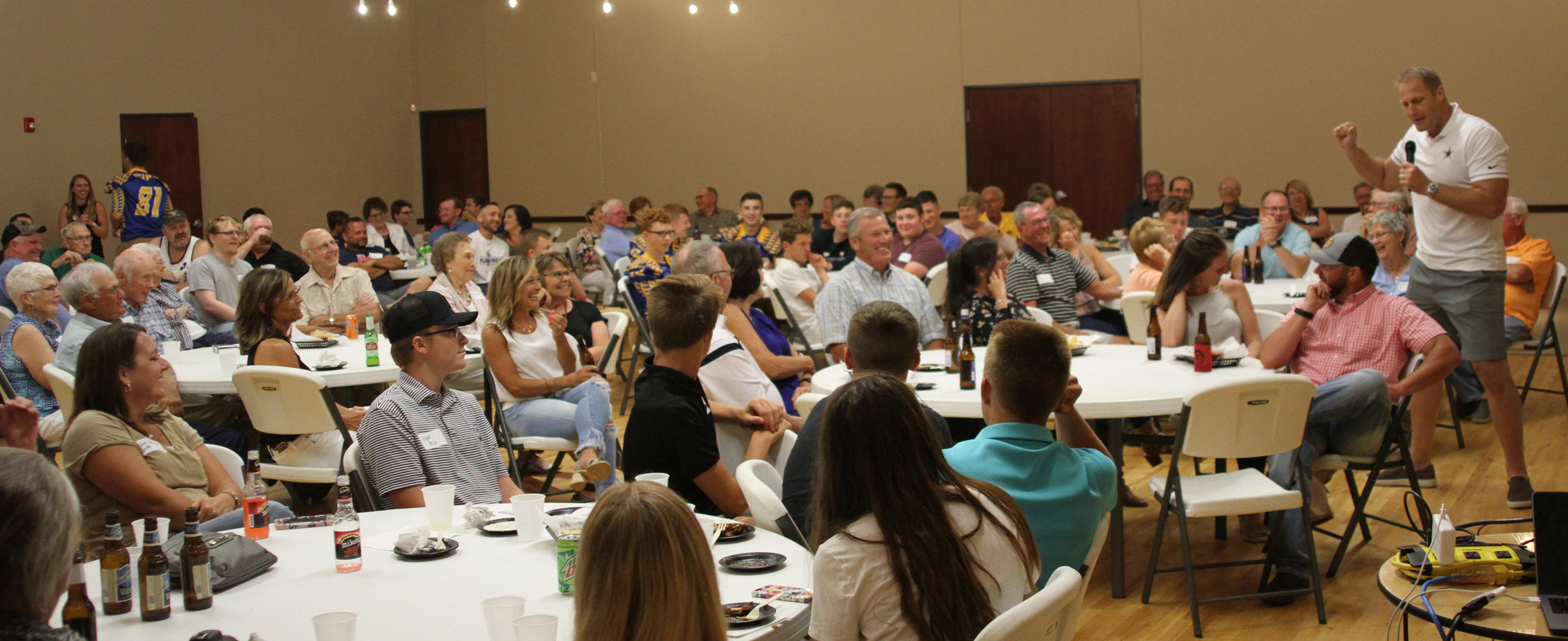
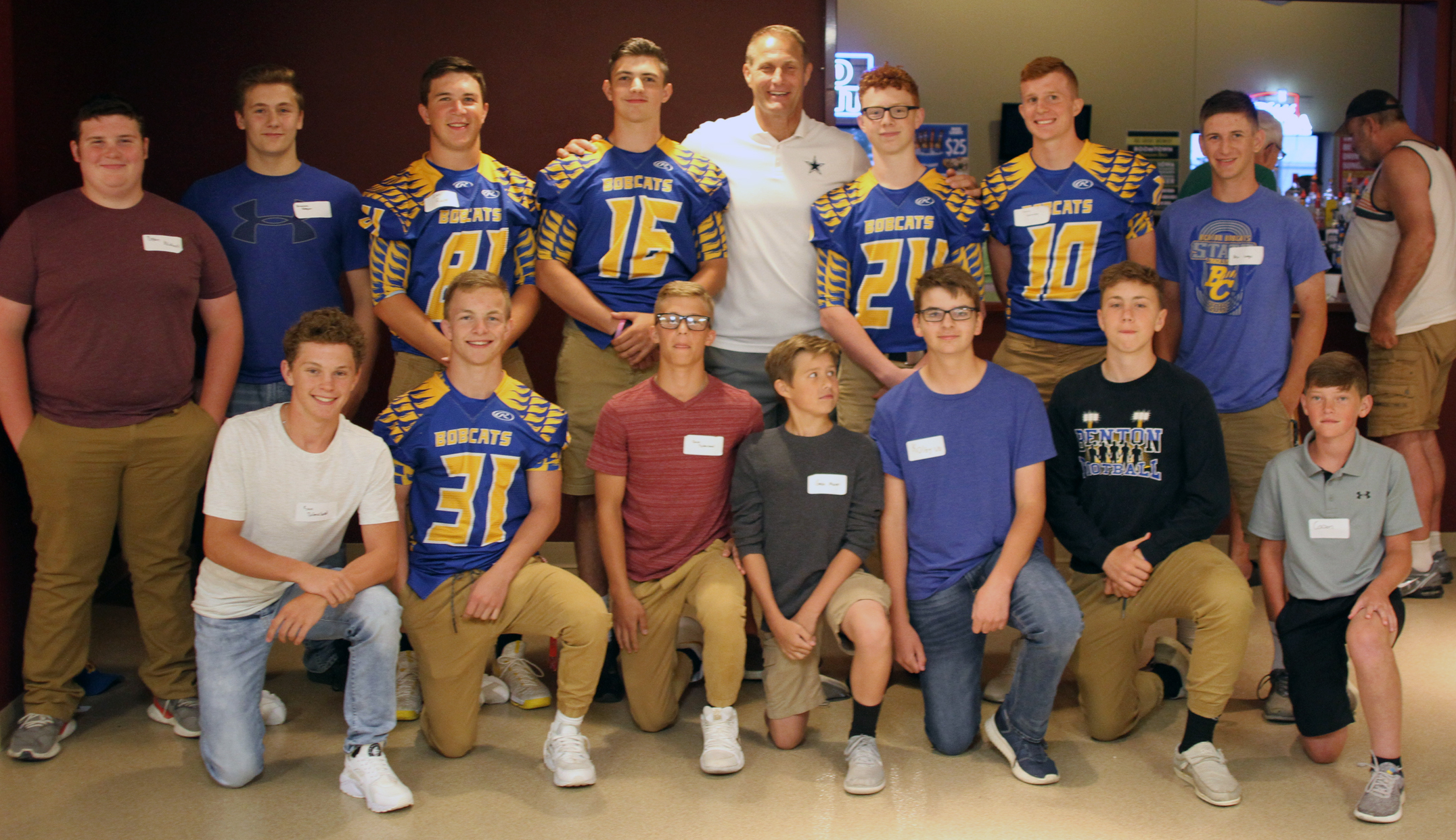
High school athlet4s pose with Chad Hennings. 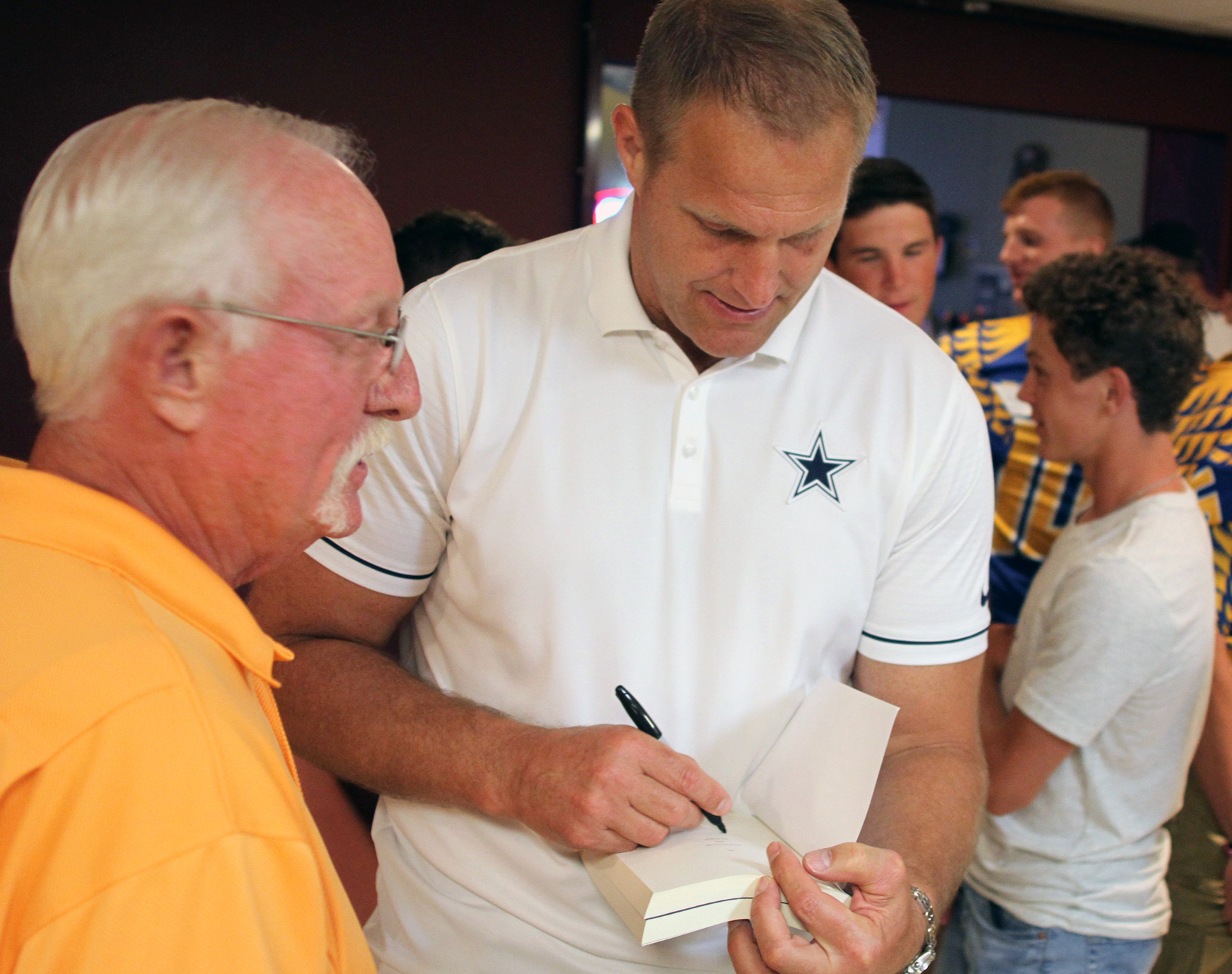
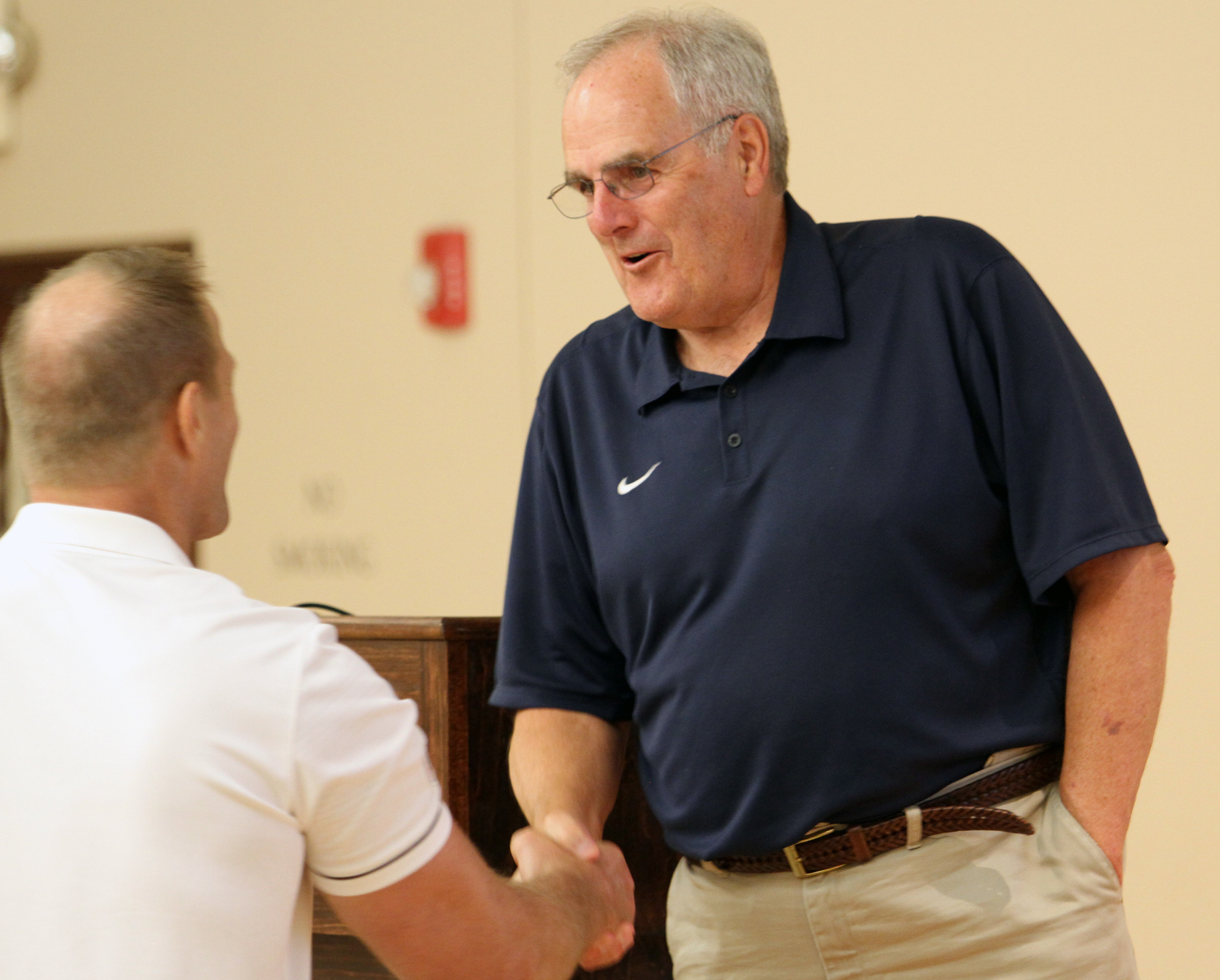
Coach Logan and Chad Hennings.
 Jim Magdefrau